 Contact Us
 (877) 248-1631
There are many ways to mount a CNC Broach Tool holder in your CNC Lathe or Mill. Here are some of the most common clamping methods we’ve seen over the years: A Hydraulic holder is the best method. Collet holders work well as long as the collet is longer than
Broaching Blog
Why Is Rigidity Important When Broaching with CNC Machines?
How a stable setup supports consistent cuts, insert life, and accurate features Rigidity is one of the most important parts of a successful CNC broaching setup. During the cutting stroke, force is transferred through the insert, broach tool, holder, and machine. Any unnecessary movement within that system can affect how
Instant Spline Identifier & Reverse Lookup: Identify Unknown ANSI, DIN 5480, and DIN 5482 Splines
A shop-floor reverse lookup that ranks published spline sizes from a tooth count, major diameter, optional minor, and over-pins — then points you to custom carbide spline inserts. Most spline jobs do not stall because the insert cannot be ground. They stall because nobody can say, with a straight face,
Expanding Small Shop Capabilities with Single-Point CNC Broaching
Adding keyways and splines without adding dedicated broaching equipment For a small machine shop, adding new manufacturing capabilities often means investing in more equipment, finding additional floor space, or outsourcing work to a specialty shop. Single-point CNC broaching offers another option. With the proper tooling, setup, and programming, shops can
What Is the Difference Between a Blind Keyway and a Through Keyway?
Why relief features are critical when broaching blind keyways At first glance, a blind keyway and a through keyway may appear to differ only in how far the slot extends through the part. From a CNC broaching standpoint, however, the difference is much more significant. A through keyway allows the
Why Machine Shops Should Keep Spline Broaching In House
Reducing cost, protecting parts, and expanding machining capability Machine shops are built around one core capability: making parts. Yet when it comes to internal splines, many shops still send the work to outside broaching specialists. For some applications, outsourcing may be necessary. However, many internal and external splines can be
Turning a Standard CNC Lathe into a Broaching Machine
How modern CNC lathes can produce internal keyways and splines without dedicated broaching equipment Many machine shops assume that producing internal keyways and splines requires a dedicated broaching machine, slotter, or secondary operation. While those methods are still used in some applications, modern CNC lathes are capable of performing many
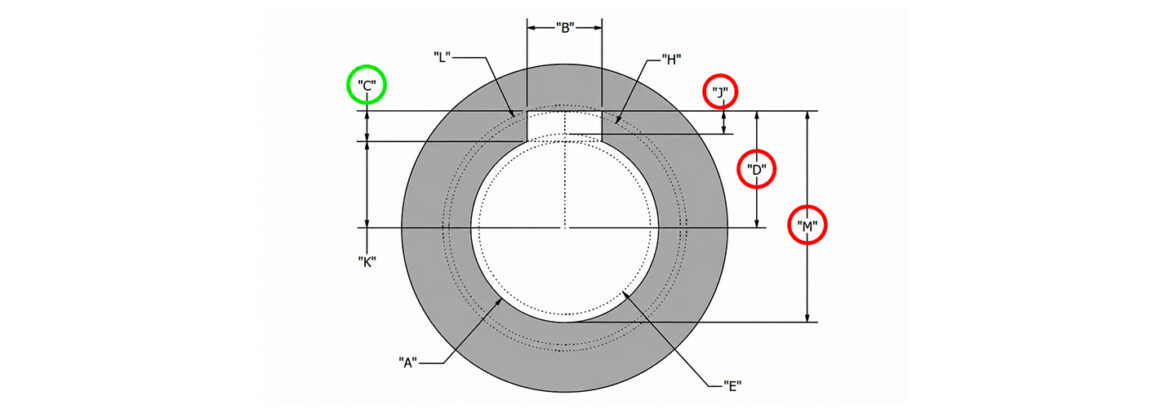
What Is the Height of Groove in Broaching?
Understanding the keyway dimension that is often overlooked When discussing a keyway, most machinists immediately focus on two dimensions: width and length. However, there is a third dimension that plays a major role in tooling selection and broaching feasibility. CNC Broach Tools refers to this radial depth as the Height
Broaching Internal Splines in Titanium and Inconel
Setup, tooling, and programming considerations for demanding materials Titanium and Inconel are commonly selected for applications that require high strength, durability, and long service life. When those parts require internal splines, the broaching process demands careful attention to tooling, setup, and programming. While these materials can be successfully broached, they
M19 Spindle Orientation Tips for CNC Broaching
When CNC broaching in a lathe or mill, the broach tool must stay aligned with the feature being cut. Since the spindle does not rotate during the broaching stroke, the cutting edge has to be oriented correctly before the tool enters the part. Many CNC broaching applications use an M19
Broaching Corners in Internal Hexes and Squares with CNC Broach Tools
Broaching internal hexes and squares can be handled with the same CNC Broach Tools holders and inserts already used for keyways, splines, and special profiles. Instead of broaching the entire shape in one pass, the process is usually done by machining the main walls first, then broaching each corner individually.